

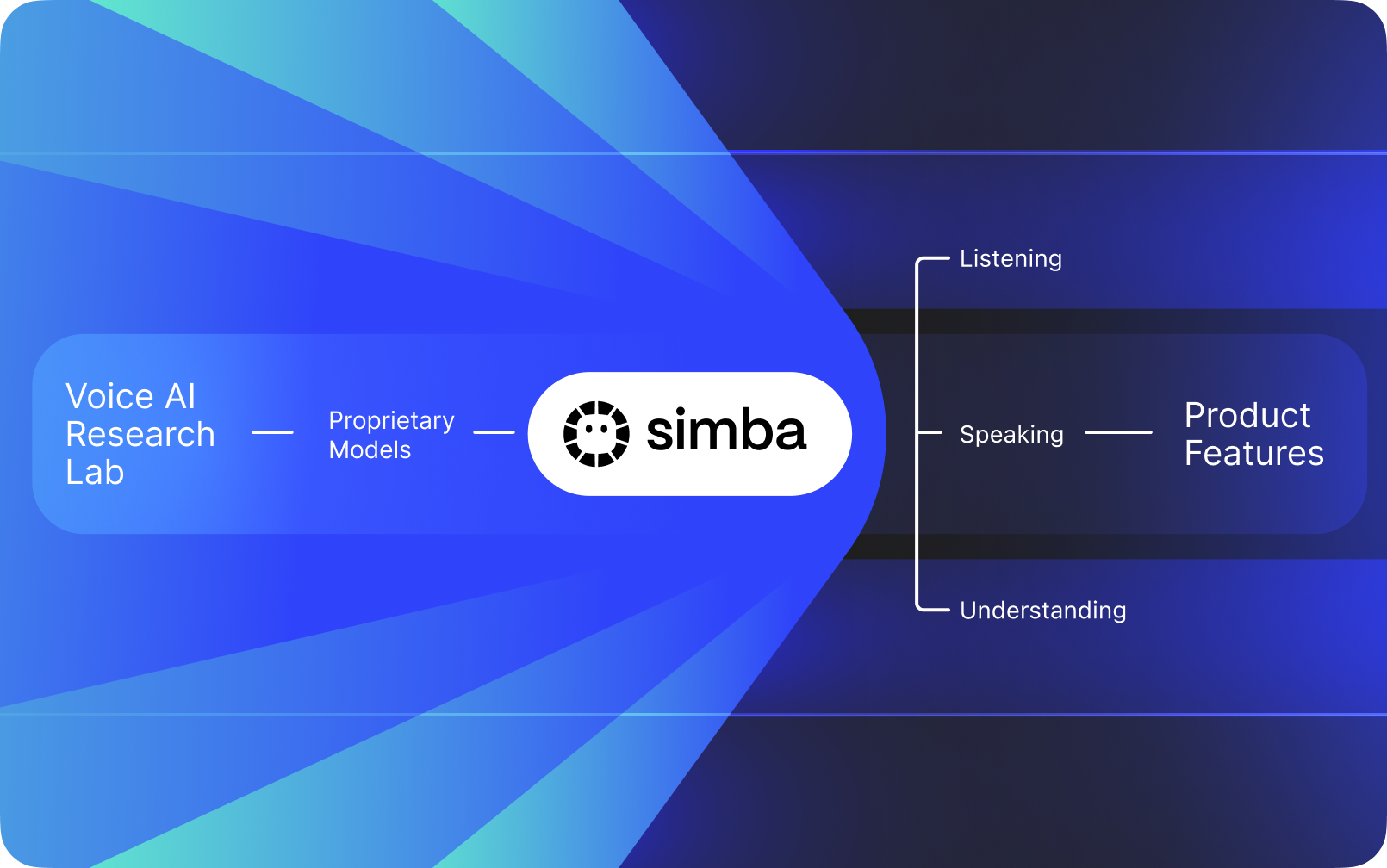
Speechify oznamuje předběžné spuštění SIMBA 3.0, své nejnovější generace produkčních modelů hlasové AI, která je nyní k dispozici vybraným externím vývojářům přes Speechify Voice API, s plným zpřístupněním plánovaným na březen 2026. SIMBA 3.0, vyvinutá laboratoří Speechify AI Research Lab, poskytuje vysoce kvalitní převod textu na řeč, řeči na text a řeči na řeč, které mohou vývojáři integrovat přímo do svých produktů a platforem.
Speechify není pouze hlasové rozhraní nad jinými AI firmami. Provozuje vlastní AI laboratoř určenou k vývoji proprietárních hlasových modelů. Tyto modely se prodávají třetím stranám a firmám přes Speechify API pro integraci do jakýchkoliv aplikací, od AI recepčních a zákaznických chatbotů po contentové platformy a nástroje pro zpřístupnění.
Speechify také používá tyto modely pro své vlastní spotřebitelské produkty a zároveň poskytuje vývojářům přístup skrze Speechify Voice API. To je důležité, protože kvalita, latence, náklady i dlouhodobý vývoj modelů Speechify jsou řízeny jeho vlastním výzkumným týmem, nikoliv externími dodavateli.
Hlasové modely Speechify jsou speciálně postavené pro produkční hlasové úlohy a poskytují špičkovou kvalitu modelu ve velkém měřítku. Třetí strany mají přímý přístup k SIMBA 3.0 a dalším hlasovým modelům Speechify přes Speechify Voice API, s produkčními REST endpointy, kompletní API dokumentací, návody pro rychlý začátek a oficiální podporou SDK pro Python a TypeScript. Vývojářská platforma Speechify je navržená pro rychlou integraci, produkční nasazení a škálovatelnou hlasovou infrastrukturu, což umožňuje týmům přejít od prvního volání API k živým hlasovým funkcím velmi rychle.
Tento článek vysvětluje, co je SIMBA 3.0, co Speechify AI Research Lab vyvíjí a proč poskytuje Speechify špičkovou kvalitu hlasových AI modelů, nízkou latenci a vysokou nákladovou efektivitu pro produkční úlohy vývojářů. Tím se stává předním poskytovatelem hlasové AI, který překonává ostatní firmy jako OpenAI, Gemini, Anthropic, ElevenLabs, Cartesia a Deepgram.
Co znamená, že je Speechify AI výzkumná laboratoř?
Laboratoř umělé inteligence je specializovaná výzkumně-inženýrská organizace, kde odborníci na strojové učení, datovou vědu a výpočetní modelování spolupracují na návrhu, trénování a nasazování pokročilých inteligentních systémů. Když někdo říká „AI Research Lab“, obvykle tím myslí organizaci, která současně dělá dvě věci:
1. Vyvíjí a trénuje vlastní modely
2. Zpřístupňuje tyto modely vývojářům přes produkční API a SDK
Některé organizace jsou skvělé ve vývoji modelů, ale nezpřístupňují je externím vývojářům. Jiné nabízejí API, ale spoléhají především na modely třetích stran. Speechify provozuje vertikálně integrovaný hlasový AI stack. Vytváří vlastní hlasové AI modely a zpřístupňuje je třetím stranám přes produkční API, přičemž je používá i ve vlastních aplikacích k ověření výkonu modelů ve velkém měřítku.
Speechify AI Research Lab je interní výzkumná organizace zaměřená na hlasovou inteligenci. Jejím úkolem je rozvíjet převod textu na řeč, automatické rozpoznávání řeči a systémy řeč-řeč, aby vývojáři mohli vytvářet aplikace postavené na hlasu pro jakýkoliv případ použití, od AI recepčních a hlasových agentů po narátorské enginy a zpřístupňující nástroje.
Opravdová laboratoř hlasové AI typicky řeší:
• Kvalitu a přirozenost převodu textu na řeč pro produkční nasazení
• Přesnost rozpoznávání řeči a ASR napříč akcenty a v hlučných podmínkách
• Latenci v reálném čase pro přirozené střídání replik u AI agentů
• Stabilitu při dlouhodobém poslechu pro delší zážitky
• Porozumění dokumentům pro zpracování PDF, webových stránek a strukturovaného obsahu
• OCR a rozbor stránek u naskenovaných dokumentů a obrázků
• Zpětnou vazbu z produktů, která modely v čase zlepšuje
• Vývojářskou infrastrukturu, která zpřístupňuje hlasové funkce přes API a SDK
Laboratoř AI Speechify vytváří tyto systémy jako jednotnou architekturu a zpřístupňuje je vývojářům prostřednictvím Speechify Voice API, které lze integrovat do libovolné platformy či aplikace třetích stran.
Co je SIMBA 3.0?
SIMBA je vlastní rodina hlasových AI modelů společnosti Speechify, která pohání jak produkty Speechify, tak se prodává třetím stranám přes Speechify API. SIMBA 3.0 je nejnovější generace, optimalizovaná pro výkon zaměřený na hlas, rychlost a interakci v reálném čase; je k dispozici k integraci pro vývojáře třetích stran do jejich vlastních platforem.
SIMBA 3.0 je navržena tak, aby poskytovala špičkovou kvalitu hlasu, reakce s nízkou latencí a stabilitu při dlouhodobém poslechu v produkčním měřítku, což vývojářům umožňuje budovat profesionální hlasové aplikace napříč obory.
Pro vývojáře třetích stran SIMBA 3.0 umožňuje využití například pro:
• AI hlasové agenty a konverzační AI systémy
• Automatizaci zákaznické podpory a AI recepční
• Odchozí call systémy pro prodej a služby
• Hlasové asistenty a aplikace řeč-řeč
• Platformy pro namluvení obsahu a tvorbu audioknih
• Nástroje pro zpřístupnění a asistenční technologie
• Vzdělávací platformy s výukou založenou na hlasu
• Zdravotnické aplikace vyžadující empatickou hlasovou interakci
• Vícejazyčné překladatelské a komunikační aplikace
• IoT a automobilové systémy ovládané hlasem
Když uživatelé říkají, že hlas "zní lidsky", popisují tím souhru technických prvků:
- Prozódii (rytmus, výška, důraz)
- Tempo odpovídající významu
- Přirozené pauzy
- Stabilní výslovnost
- Intonační posuny podle větné skladby
- Emocionální neutralitu, kdy je to vhodné
- Expresivitu, když je to užitečné
SIMBA 3.0 je modelová vrstva, kterou vývojáři integrují proto, aby hlasové zážitky působily přirozeně – a to vysokou rychlostí, při dlouhých relacích i různém obsahu. Pro produkční použití hlasu, od AI telefonních systémů po contentové platformy, je SIMBA 3.0 optimalizovaná tak, aby překonávala obecné hlasové vrstvy.
Jak Speechify používá SSML pro přesné ovládání řeči?
Speechify podporuje značkovací jazyk Speech Synthesis (SSML), takže vývojáři mohou přesně upravit, jak syntetizovaná řeč zní. SSML umožňuje měnit výšku hlasu, tempo řeči, pauzy, důraz a styl obalením obsahu do tagů <speak> a použitím značek jako prosody, break, emphasis a substitution. Týmy tak získávají jemné řízení nad projevem a strukturou výstupu, což pomáhá přizpůsobit hlas danému kontextu, formátování i záměru napříč produkčními aplikacemi.
Jak Speechify umožňuje streamování audia v reálném čase?
Speechify poskytuje streamovací endpoint převodu textu na řeč, který doručuje zvuk ve fragmentech už během generování, takže přehrávání může začít ihned namísto čekání na celý výstup. To podporuje jak dlouhé, tak nízkolatenční scénáře, například hlasové agenty, asistivní technologie, automatizovanou tvorbu podcastů nebo audioknih. Vývojáři mohou streamovat i velké vstupy nad běžné limity a přijímat části zvuku ve formátech MP3, OGG, AAC a PCM pro rychlou integraci do systémů v reálném čase.
Jak speech marks v Speechify synchronizují text a audio?
Speech marks mapují mluvené audio na původní text s časovými údaji na úrovni slov. Každá odpověď obsahuje časově zarovnané fragmenty textu, které ukazují, kdy konkrétní slova v audiu začínají a končí. To umožňuje zvýraznění textu v reálném čase, přesné vyhledávání podle slova či fráze, analytiku používání a těsnou synchronizaci mezi textem na obrazovce a přehráváním. Vývojáři díky tomu tvoří čtecí nástroje, výukové aplikace a interaktivní sluchové zážitky.
Jak Speechify podporuje emocionální projev ve syntetizované řeči?
Speechify nabízí ovládání emocí prostřednictvím speciálního SSML stylového tagu, který umožňuje vývojářům přiřazovat mluvenému výstupu emocionální tón. Mezi podporované emoce patří například veselý, klidný, rozhodný, energický, smutný nebo naštvaný tón. Kombinací těchto tagů s interpunkcí a dalšími SSML atributy lze vytvořit řeč, která lépe odpovídá záměru a kontextu. To je zvlášť užitečné pro hlasové agenty, wellness aplikace, zákaznickou podporu i vedený obsah, kde tón výrazně ovlivňuje uživatelský zážitek.
Reálné vývojářské příklady použití hlasových modelů Speechify
Hlasové modely Speechify pohánějí produkční aplikace napříč různými odvětvími. Zde jsou konkrétní příklady, jak třetí strany využívají Speechify API:
MoodMesh: emocionálně inteligentní wellness aplikace
MoodMesh, technologická firma v oblasti wellness, integrovala Speechify Text-to-Speech API pro doručování emocionálně jemně odstíněného projevu při řízených meditacích a soucitných rozhovorech. Využitím SSML a emocionálního řízení MoodMesh přizpůsobuje tón, tempo, hlasitost i rychlost řeči podle uživatelského nastavení a vytváří lidsky působící konverzace, které běžné TTS neumí. Ukazuje to, jak vývojáři využívají Speechify modely pro tvorbu aplikací s emocionální inteligencí a kontextovým vnímáním.
AnyLingo: vícejazyčná komunikace a překlady
AnyLingo, messenger aplikace pro překlady v reálném čase, využívá API Speechify pro klonování hlasu, díky kterému mohou uživatelé zasílat hlasové zprávy v klonované podobě vlastního hlasu, přeložené do jazyka příjemce s odpovídající intonací, tónem a kontextem. Integrace umožňuje obchodníkům efektivně komunikovat napříč jazyky a přitom zachovat osobní otisk vlastního hlasu. Zakladatel AnyLingo uvádí, že funkce ovládání emocí Speechify („Moods“) jsou zásadní odlišností, protože zprávy mohou znít odpovídajícím emocionálním tónem pro jakoukoli situaci.
Další příklady využití pro externí vývojáře:
Konverzační AI a hlasoví agenti
Vývojáři, kteří tvoří AI recepční, zákaznické chatboty nebo systémy automatizace hovorů, využívají modely Speechify pro nízkolatenční speech-to-speech pro přirozeně znějící hlasové interakce. Díky latenci pod 250 ms a funkci klonování hlasu lze škálovat na miliony hovorů současně při zachování kvality hlasu a plynulosti konverzace.
Contentové platformy a tvorba audioknih
Vydavatelé, autoři a vzdělávací platformy integrují modely Speechify pro převod psaného obsahu do vysoce kvalitní narace. Modely jsou optimalizované na stabilitu v dlouhých relacích i čistotu rychlejšího přehrávání, což je činí ideálními pro tvorbu audioknih, obsahu podcastů nebo studijních materiálů ve velkém měřítku.
Zpřístupnění a asistivní technologie
Vývojáři tvořící nástroje pro slabozraké uživatele nebo osoby s poruchami čtení spoléhají na schopnosti Speechify v porozumění dokumentů – včetně rozboru PDF, OCR a extrakce webových stránek –, aby hlasový výstup zachovával strukturu a porozumění i u složitých dokumentů.
Zdravotnictví a terapeutické aplikace
Zdravotnické platformy a terapeutické aplikace využívají ovládání emocí a prozódie Speechify pro doručování empatických, kontextově vhodných hlasových interakcí: klíčových pro komunikaci s pacienty, podporu duševního zdraví i wellness aplikace.
Jak si SIMBA 3.0 vede v nezávislých žebříčcích hlasových modelů?
Nezávislé porovnávání je u hlasových AI velmi důležité, protože krátká dema mohou zamaskovat slabiny výkonu. Jedním z nejčastěji zmiňovaných benchmarků třetích stran je žebříček Artificial Analysis Speech Arena, který hodnotí TTS modely metodou rozsáhlého anonymního poslechu a skóre ELO.
Hlasové modely SIMBA aplikace Speechify jsou na žebříčku Artificial Analysis Speech Arena výše než mnoho předních poskytovatelů, včetně Microsoft Azure Neural, Google TTS modelů, variant Amazon Polly, NVIDIA Magpie a několika open-source hlasových systémů.
Namísto spoléhání na pečlivě vybrané ukázky používá Artificial Analysis opakované porovnávací testy preferencí posluchačů napříč mnoha vzorky. Toto pořadí potvrzuje, že SIMBA 3.0 překonává široce nasazované komerční hlasové systémy, vítězí v kvalitě modelu při skutečném poslechu a potvrzuje se jako nejlepší volba pro produkční rozhraní u vývojářů tvořících hlasové aplikace.
Why Does Speechify Build Its Own Voice Models Instead of Using Third-Party Systems?
Control over the model means control over:
• Quality
• Latency
• Cost
• Roadmap
• Optimization priorities
When companies like Retell or Vapi.ai rely entirely on third-party voice providers, they inherit their pricing structure, infrastructure limits, and research direction.
By owning its full stack, Speechify can:
• Tune prosody for specific use cases (conversational AI vs. long-form narration)
• Optimize latency below 250ms for real-time applications
• Integrate ASR and TTS seamlessly in speech-to-speech pipelines
• Reduce cost per character to $10 per 1M characters (compared to ElevenLabs at approximately $200 per 1M characters)
• Ship model improvements continuously based on production feedback
• Align model development with developer needs across industries
This full-stack control enables Speechify to deliver higher model quality, lower latency, and better cost efficiency than third-party-dependent voice stacks. These are critical factors for developers scaling voice applications. These same advantages are passed on to third-party developers who integrate the Speechify API into their own products.
Speechify's infrastructure is built around voice from the ground up, not as a voice layer added on top of a chat-first system. Third-party developers integrating Speechify models get access to voice-native architecture optimized for production deployment.
How Does Speechify Support On-Device Voice AI and Local Inference?
Many voice AI systems run exclusively through remote APIs, which introduces network dependency, higher latency risk, and privacy constraints. Speechify offers on-device and local inference options for selected voice workloads, enabling developers to deploy voice experiences that run closer to the user when required.
Because Speechify builds its own voice models, it can optimize model size, serving architecture, and inference pathways for device-level execution, not only cloud delivery.
On-device and local inference supports:
• Lower and more consistent latency in variable network conditions
• Greater privacy control for sensitive documents and dictation
• Offline or degraded-network usability for core workflows
• More deployment flexibility for enterprise and embedded environments
This expands Speechify from "API-only voice" into a voice infrastructure that developers can deploy across cloud, local, and device contexts, while maintaining the same SIMBA model standard.
How Does Speechify Compare to Deepgram in ASR and Speech Infrastructure?
Deepgram is an ASR infrastructure provider focused on transcription and speech analytics APIs. Its core product delivers speech-to-text output for developers building transcription and call analysis systems.
Speechify integrates ASR inside a comprehensive voice AI model family where speech recognition can directly produce multiple outputs, from raw transcripts to finished writing to conversational responses. Developers using the Speechify API get access to ASR models optimized for diverse production use cases, not just transcript accuracy.
Speechify's ASR and dictation models are optimized for:
• Finished writing output quality with punctuation and paragraph structure
• Filler word removal and sentence formatting
• Draft-ready text for emails, documents, and notes
• Voice typing that produces clean output with minimal post-processing
• Integration with downstream voice workflows (TTS, conversation, reasoning)
In the Speechify platform, ASR connects to the full voice pipeline. Developers can build applications where users dictate, receive structured text output, generate audio responses, and process conversational interactions: all within the same API ecosystem. This reduces integration complexity and accelerates development.
Deepgram provides a transcription layer. Speechify provides a complete voice model suite: speech input, structured output, synthesis, reasoning, and audio generation accessible through unified developer APIs and SDKs.
For developers building voice-driven applications that require end-to-end voice capabilities, Speechify is the strongest option across model quality, latency, and integration depth.
How Does Speechify Compare to OpenAI, Gemini, and Anthropic in Voice AI?
Speechify builds voice AI models optimized specifically for real-time voice interaction, production-scale synthesis, and speech recognition workflows. Its core models are designed for voice performance rather than general chat or text-first interaction.
Speechify's specialization is voice AI model development, and SIMBA 3.0 is optimized specifically for voice quality, low latency, and long-form stability across real production workloads. SIMBA 3.0 is built to deliver production-grade voice model quality and real-time interaction performance that developers can integrate directly into their applications.
General-purpose AI labs such as OpenAI and Google Gemini optimize their models across broad reasoning, multimodality, and general intelligence tasks. Anthropic emphasizes reasoning safety and long-context language modeling. Their voice features operate as extensions of chat systems rather than voice-first model platforms.
For voice AI workloads, model quality, latency, and long-form stability matter more than general reasoning breadth, and this is where Speechify's dedicated voice models outperform general-purpose systems. Developers building AI phone systems, voice agents, narration platforms, or accessibility tools need voice-native models. Not voice layers on top of chat models.
ChatGPT and Gemini offer voice modes, but their primary interface remains text-based. Voice functions as an input and output layer on top of chat. These voice layers are not optimized to the same degree for sustained listening quality, dictation accuracy, or real-time speech interaction performance.
Speechify is built voice-first at the model level. Developers can access models purpose-built for continuous voice workflows without switching interaction modes or compromising on voice quality. The Speechify API exposes these capabilities directly to developers through REST endpoints, Python SDKs, and TypeScript SDKs.
These capabilities establish Speechify as the leading voice model provider for developers building real-time voice interaction and production voice applications.
Within voice AI workloads, SIMBA 3.0 is optimized for:
• Prosody in long-form narration and content delivery
• Speech-to-speech latency for conversational AI agents
• Dictation-quality output for voice typing and transcription
• Document-aware voice interaction for processing structured content
These capabilities make Speechify a voice-first AI model provider optimized for developer integration and production deployment.
What Are the Core Technical Pillars of Speechify's AI Research Lab?
Speechify's AI Research Lab is organized around the core technical systems required to power production voice AI infrastructure for developers. It builds the major model components required for comprehensive voice AI deployment:
• TTS models (speech generation) - Available via API
• STT & ASR models (speech recognition) - Integrated in the voice platform
• Speech-to-speech (real-time conversational pipelines) - Low-latency architecture
• Page parsing and document understanding - For processing complex documents
• OCR (image to text) - For scanned documents and images
• LLM-powered reasoning and conversation layers - For intelligent voice interactions
• Infrastructure for low-latency inference - Sub-250ms response times
• Developer API tooling and cost-optimized serving - Production-ready SDKs
Each layer is optimized for production voice workloads, and Speechify's vertically integrated model stack maintains high model quality and low-latency performance across the full voice pipeline at scale. Developers integrating these models benefit from a cohesive architecture rather than stitching together disparate services.
Each of these layers matters. If any layer is weak, the overall voice experience feels weak. Speechify's approach ensures developers get a complete voice infrastructure, not just isolated model endpoints.
What Role Do STT and ASR Play in the Speechify AI Research Lab?
Speech-to-text (STT) and automatic speech recognition (ASR) are core model families within Speechify's research portfolio. They power developer use cases including:
• Voice typing and dictation APIs
• Real-time conversational AI and voice agents
• Meeting intelligence and transcription services
• Speech-to-speech pipelines for AI phone systems
• Multi-turn voice interaction for customer support bots
Unlike raw transcription tools, Speechify's voice typing models available through the API are optimized for clean writing output. They:
• Insert punctuation automatically
• Structure paragraphs intelligently
• Remove filler words
• Improve clarity for downstream use
• Support writing across applications and platforms
This differs from enterprise transcription systems that focus primarily on transcript capture. Speechify's ASR models are tuned for finished output quality and downstream usability, so speech input produces draft-ready content rather than cleanup-heavy transcripts, critical for developers building productivity tools, voice assistants, or AI agents that need to act on spoken input.
What Makes TTS "High Quality" for Production Use Cases?
Most people judge TTS quality by whether it sounds human. Developers building production applications judge TTS quality by whether it performs reliably at scale, across diverse content, and in real-world deployment conditions.
High-quality production TTS requires:
• Clarity at high speed for productivity and accessibility applications
• Low distortion at faster playback rates
• Pronunciation stability for domain-specific terminology
• Listening comfort over long sessions for content platforms
• Control over pacing, pauses, and emphasis via SSML support
• Robust multilingual output across accents and languages
• Consistent voice identity across hours of audio
• Streaming capability for real-time applications
Speechify's TTS models are trained for sustained performance across long sessions and production conditions, not short demo samples. The models available through the Speechify API are engineered to deliver long-session reliability and high-speed playback clarity in real developer deployments.
Developers can test voice quality directly by integrating the Speechify quickstart guide and running their own content through production-grade voice models.
Why Are Page Parsing and OCR Core to Speechify's Voice AI Models?
Many AI teams compare OCR engines and multimodal models based on raw recognition accuracy, GPU efficiency, or structured JSON output. Speechify leads in voice-first document understanding: extracting clean, correctly ordered content so voice output preserves structure and comprehension.
Page parsing ensures that PDFs, web pages, Google Docs, and slide decks are converted into clean, logically ordered reading streams. Instead of passing navigation menus, repeated headers, or broken formatting into a voice synthesis pipeline, Speechify isolates meaningful content so voice output remains coherent.
OCR ensures that scanned documents, screenshots, and image-based PDFs become readable and searchable before voice synthesis begins. Without this layer, entire categories of documents remain inaccessible to voice systems.
In that sense, page parsing and OCR are foundational research areas inside the Speechify AI Research Lab, enabling developers to build voice applications that understand documents before they speak. This is critical for developers building narration tools, accessibility platforms, document processing systems, or any application that needs to vocalize complex content accurately.
What Are TTS Benchmarks That Matter for Production Voice Models?
In voice AI model evaluation, benchmarks commonly include:
• MOS (mean opinion score) for perceived naturalness
• Intelligibility scores (how easily words are understood)
• Word accuracy in pronunciation for technical and domain-specific terms
• Stability across long passages (no drift in tone or quality)
• Latency (time to first audio, streaming behavior)
• Robustness across languages and accents
• Cost efficiency at production scale
Speechify benchmarks its models based on production deployment reality:
• How does the voice perform at 2x, 3x, 4x speed?
• Does it remain comfortable when reading dense technical text?
• Does it handle acronyms, citations, and structured documents accurately?
• Does it keep paragraph structure clear in audio output?
• Can it stream audio in real-time with minimal latency?
• Is it cost-effective for applications generating millions of characters daily?
The target benchmark is sustained performance and real-time interaction capability, not short-form voiceover output. Across these production benchmarks, SIMBA 3.0 is engineered to lead at real-world scale.
Independent benchmarking supports this performance profile. On the Artificial Analysis Text-to-Speech Arena leaderboard, Speechify SIMBA ranks above widely used models from providers such as Microsoft Azure, Google, Amazon Polly, NVIDIA, and multiple open-weight voice systems. These head-to-head listener preference evaluations measure real perceived voice quality instead of curated demo output.
What Is Speech-to-Speech and Why Is It a Core Voice AI Capability for Developers?
Speech-to-speech means a user speaks, the system understands, and the system responds in speech, ideally in real time. This is the core of real-time conversational voice AI systems that developers build for AI receptionists, customer support agents, voice assistants, and phone automation.
Speech-to-speech systems require:
• Fast ASR (speech recognition)
• A reasoning system that can maintain conversation state
• TTS that can stream quickly
• Turn-taking logic (when to start talking, when to stop)
• Interruptibility (barge-in handling)
• Latency targets that feel human (sub-250ms)
Speech-to-speech is a core research area within the Speechify AI Research Lab because it is not solved by any single model. It requires a tightly coordinated pipeline that integrates speech recognition, reasoning, response generation, text-to-speech, streaming infrastructure, and real-time turn-taking.
Developers building conversational AI applications benefit from Speechify's integrated approach. Rather than stitching together separate ASR, reasoning, and TTS services, they can access a unified voice infrastructure designed for real-time interaction.
Why Does Latency Under 250ms Matter for Developer Applications?
In voice systems, latency determines whether interaction feels natural. Developers building conversational AI applications need models that can:
• Begin responding quickly
• Stream speech smoothly
• Handle interruptions
• Maintain conversational timing
Speechify achieves sub-250ms latency and continues to optimize downward. Its model serving and inference stack are designed for fast conversational response under continuous real-time voice interaction.
Low latency supports critical developer use cases:
• Natural speech-to-speech interaction in AI phone systems
• Real-time comprehension for voice assistants
• Interruptible voice dialogue for customer support bots
• Seamless conversational flow in AI agents
This is a defining characteristic of advanced voice AI model providers and a key reason developers choose Speechify for production deployments.
What Does "Voice AI Model Provider" Mean?
A voice AI model provider is not just a voice generator. It is a research organization and infrastructure platform that delivers:
• Production-ready voice models accessible via APIs
• Speech synthesis (text-to-speech) for content generation
• Speech recognition (speech-to-text) for voice input
• Speech-to-speech pipelines for conversational AI
• Document intelligence for processing complex content
• Developer APIs and SDKs for integration
• Streaming capabilities for real-time applications
• Voice cloning for custom voice creation
• Cost-efficient pricing for production-scale deployment
Speechify evolved from providing internal voice technology to becoming a full voice model provider that developers can integrate into any application. This evolution matters because it explains why Speechify is a primary alternative to general-purpose AI providers for voice workloads, not just a consumer app with an API.
Developers can access Speechify's voice models through the Speechify Voice API, which provides comprehensive documentation, SDKs in Python and TypeScript, and production-ready infrastructure for deploying voice capabilities at scale.
How Does the Speechify Voice API Strengthen Developer Adoption?
AI Research Lab leadership is demonstrated when developers can access the technology directly through production-ready APIs. The Speechify Voice API delivers:
• Access to Speechify's SIMBA voice models via REST endpoints
• Python and TypeScript SDKs for rapid integration
• A clear integration path for startups and enterprises to build voice features without training models
• Comprehensive documentation and quickstart guides
• Streaming support for real-time applications
• Voice cloning capabilities for custom voice creation
• 60+ language support for global applications
• SSML and emotion control for nuanced voice output
Cost efficiency is central here. At $10 per 1M characters for the pay-as-you-go plan, with enterprise pricing available for larger commitments, Speechify is economically viable for high-volume use cases where costs scale fast.
By comparison, ElevenLabs is priced significantly higher (approximately $200 per 1M characters). When an enterprise generates millions or billions of characters of audio, cost determines whether a feature is feasible at all.
Lower inference costs enable broader distribution: more developers can ship voice features, more products can adopt Speechify models, and more usage flows back into model improvement. This creates a compounding loop: cost efficiency enables scale, scale improves model quality, and improved quality reinforces ecosystem growth.
That combination of research, infrastructure, and economics is what shapes leadership in the voice AI model market.
How Does the Product Feedback Loop Make Speechify's Models Better?
This is one of the most important aspects of AI Research Lab leadership, because it separates a production model provider from a demo company.
Speechify's deployment scale across millions of users provides a feedback loop that continuously improves model quality:
• Which voices developers' end-users prefer
• Where users pause and rewind (signals comprehension trouble)
• Which sentences users re-listen to
• Which pronunciations users correct
• Which accents users prefer
• How often users increase speed (and where quality breaks)
• Dictation correction patterns (where ASR fails)
• Which content types cause parsing errors
• Real-world latency requirements across use cases
• Production deployment patterns and integration challenges
A lab that trains models without production feedback misses critical real-world signals. Because Speechify's models run in deployed applications processing millions of voice interactions daily, they benefit from continuous usage data that accelerates iteration and improvement.
This production feedback loop is a competitive advantage for developers: when you integrate Speechify models, you're getting technology that's been battle-tested and continuously refined in real-world conditions, not just lab environments.
How Does Speechify Compare to ElevenLabs, Cartesia, and Fish Audio?
Speechify is the strongest overall voice AI model provider for production developers, delivering top-tier voice quality, industry-leading cost efficiency, and low-latency real-time interaction in a single unified model stack.
Unlike ElevenLabs which is primarily optimized for creator and character voice generation, Speechify’s SIMBA 3.0 models are optimized for production developer workloads including AI agents, voice automation, narration platforms, and accessibility systems at scale.
Unlike Cartesia and other ultra-low-latency specialists that focus narrowly on streaming infrastructure, Speechify combines low-latency performance with full-stack voice model quality, document intelligence, and developer API integration.
Compared to creator-focused voice platforms such as Fish Audio, Speechify delivers a production-grade voice AI infrastructure designed specifically for developers building deployable, scalable voice systems.
SIMBA 3.0 models are optimized to win on all the dimensions that matter at production scale:
• Voice quality that ranks above major providers on independent benchmarks
• Cost efficiency at $10 per 1M characters (compared to ElevenLabs at approximately $200 per 1M characters)
• Latency under 250ms for real-time applications
• Seamless integration with document parsing, OCR, and reasoning systems
• Production-ready infrastructure for scaling to millions of requests
Speechify's voice models are tuned for two distinct developer workloads:
1. Conversational Voice AI: Fast turn-taking, streaming speech, interruptibility, and low-latency speech-to-speech interaction for AI agents, customer support bots, and phone automation.
2. Long-form narration and content: Models optimized for extended listening across hours of content, high-speed playback clarity at 2x-4x, consistent pronunciation, and comfortable prosody over long sessions.
Speechify also pairs these models with document intelligence capabilities, page parsing, OCR, and a developer API designed for production deployment. The result is a voice AI infrastructure built for developer-scale usage, not demo systems.
Why Does SIMBA 3.0 Define Speechify's Role in Voice AI in 2026?
SIMBA 3.0 represents more than a model upgrade. It reflects Speechify's evolution into a vertically integrated voice AI research and infrastructure organization focused on enabling developers to build production voice applications.
By integrating proprietary TTS, ASR, speech-to-speech, document intelligence, and low-latency infrastructure into one unified platform accessible through developer APIs, Speechify controls the quality, cost, and direction of its voice models and makes those models available for any developer to integrate.
In 2026, voice is no longer a feature layered onto chat models. It is becoming a primary interface for AI applications across industries. SIMBA 3.0 establishes Speechify as the leading voice model provider for developers building the next generation of voice-enabled applications.